
The Modeling Room: (M2) Describe the people & things - (A8) Identify members
Series: The Modeling Room, module 2, article 8 of 26. Follow the front desk's identity problem to test customer and bike identifiers. Build a source-aware identity card, map customers to stored rows, and explain why a new description is not a new person.
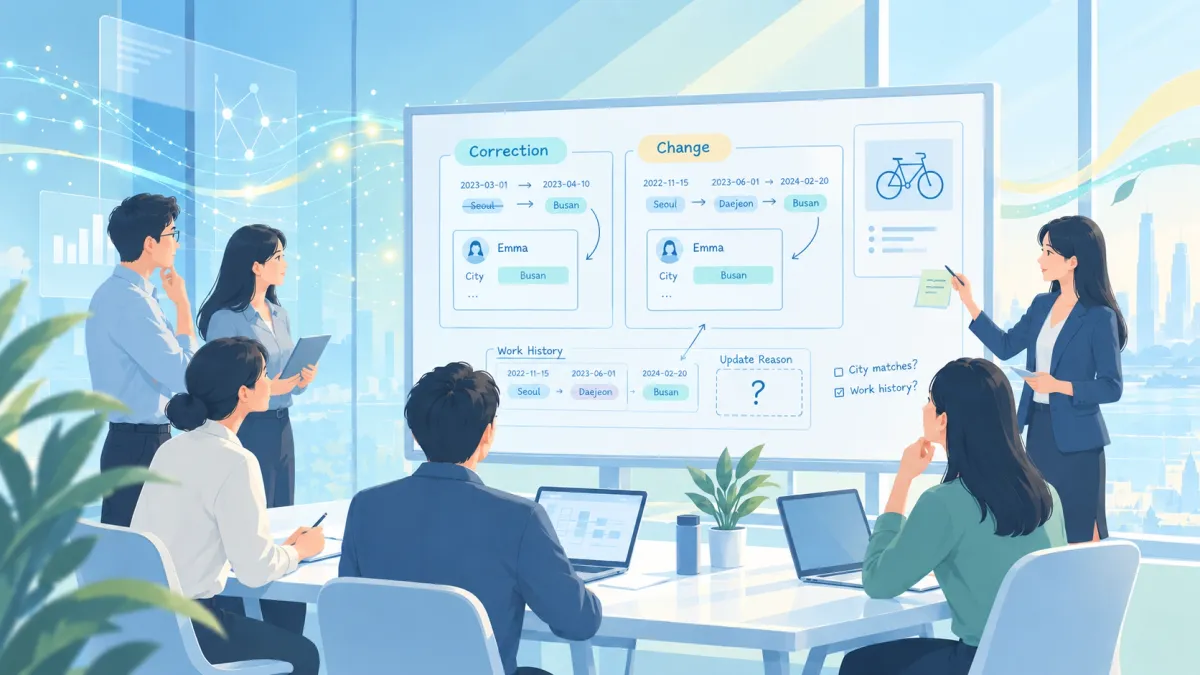
Who should read it?
Students learning modelstorming, analysts, report builders, data modelers working with business experts
Prerequisite
Separate event details from descriptions about a detail, as in article 7.
Learning objective
Identify dimension members reliably with tested business keys, and distinguish those identities from warehouse-generated row keys.
Artifact
A tested identity card with source namespaces, candidate-key decisions, an example surrogate-key mapping, and named source checks.
Why this matters
2 customers can share a name, and one customer can change hers. A report that recognizes customers by name puts one repair history on two screens, or two histories on one. Every total stays correct while the story is wrong. This lesson gives you the identity card that keeps members apart.
What you'll learn
- How to test candidate identifiers and choose a business key interpreted within the source that issued it.
- How to map source identities to warehouse rows without treating a generated row number as a customer.
Your output: one identity card with an example row mapping, explained tests, and named source checks.
New terms: business key, surrogate key, source namespace.